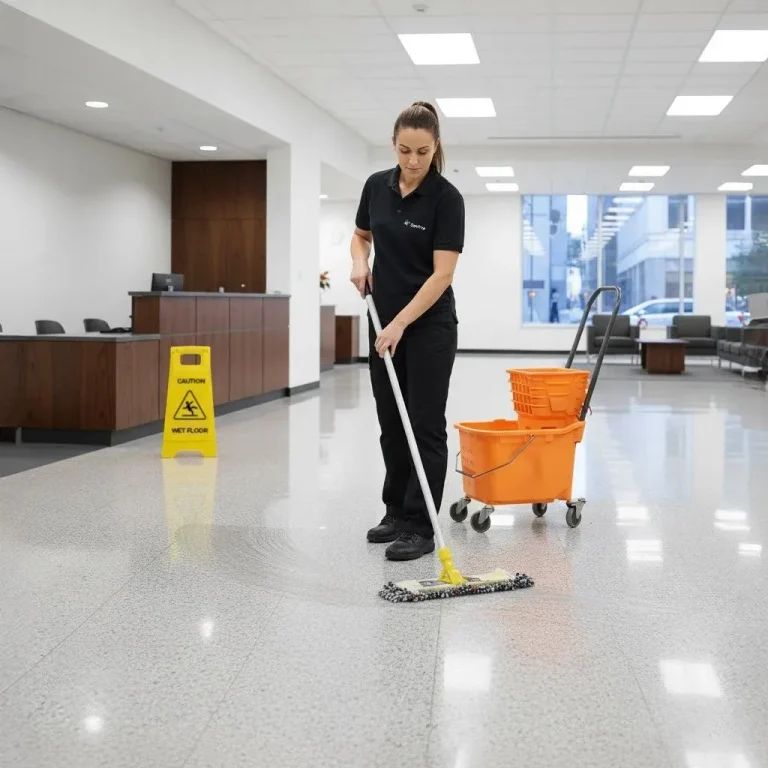

Choosing between fixed-price and hourly commercial cleaning can have a major impact on your business expenses, workplace hygiene, and overall cleaning quality. Both pricing models offer advantages, but the right choice depends on your property’s size, cleaning requirements, operating hours, and expected service standards.
For business owners and facility managers, understanding how commercial cleaning contracts are priced makes it easier to control costs without compromising cleanliness. A well-structured cleaning agreement should provide consistent results, clear expectations, and reliable service that supports a healthy and professional working environment.
Is Fixed-Price or Hourly Commercial Cleaning Better?
Fixed-price commercial cleaning is generally better for businesses that need regular cleaning, predictable monthly expenses, and clearly defined service standards. Hourly commercial cleaning offers greater flexibility for occasional, irregular, or specialised tasks. The best option depends on how often your premises need cleaning and how clearly the required work can be defined.
What Is Fixed-Price Commercial Cleaning?
Fixed-price commercial cleaning is a service arrangement where a cleaning company charges an agreed amount for completing specific cleaning duties within a defined schedule. Instead of paying for every hour worked, the business pays a consistent fee based on the agreed scope of work.
This pricing structure is commonly used for offices, retail spaces, commercial buildings, medical facilities, warehouses, and other workplaces that require ongoing cleaning and maintenance.
For example, a business may arrange a commercial cleaning contract that covers daily vacuuming, mopping, bathroom sanitation, rubbish removal, kitchen cleaning, dusting, and general surface maintenance. The cleaning provider assesses the property, determines the required labour and resources, and provides a fixed weekly or monthly price.
The important factor is that the price is connected to the agreed cleaning responsibilities rather than simply the number of hours spent on site.
A fixed-price arrangement works particularly well when a business has consistent cleaning requirements. Facility managers can establish a regular schedule, monitor service quality, and plan their operating budgets without worrying about ordinary changes in cleaning time.
However, businesses should make sure the contract clearly explains what is included. Additional services, emergency cleaning, specialist floor treatments, and unexpected cleaning requirements may need separate pricing.
What Is Hourly Commercial Cleaning?
Hourly commercial cleaning is a pricing model where businesses pay according to the amount of time cleaners spend completing the assigned work.
The cleaning provider charges an agreed hourly rate, usually based on the number of cleaners required and the expected duration of the service.
For example, a small office might arrange for one cleaner to attend for three hours every week. If the business needs additional attention before an important meeting or after a busy period, it can request extra cleaning hours.
This arrangement provides flexibility because businesses can adjust the amount of cleaning time depending on their immediate requirements.
Hourly commercial cleaning is often suitable for businesses with changing cleaning needs, occasional maintenance requirements, or properties that do not require a regular cleaning schedule.
It can also be useful when a business wants to arrange a one-time deep clean, prepare a commercial property for inspection, or address an unexpected cleaning issue.
However, hourly pricing can make monthly expenses less predictable. If a cleaning task takes longer than expected, the total cost increases. Businesses may also need to monitor the amount of time allocated to each task to ensure the cleaning budget is being used effectively.
Fixed-Price vs. Hourly Commercial Cleaning: Understanding the Main Differences
Although both pricing models provide professional cleaning services, they differ in how costs are calculated, how work is organised, and how businesses manage their cleaning budgets.
Pricing Structure and Budget Control
The biggest difference between fixed-price and hourly commercial cleaning is cost predictability.
With fixed-price cleaning, businesses agree on a specific amount for a defined scope of work. This makes it easier to forecast monthly expenses and include cleaning services in an annual operating budget.
For example, an office with a regular cleaning schedule can allocate the same monthly amount for its contracted services, provided the agreed scope and service conditions remain unchanged.
Hourly cleaning works differently because the final cost depends on the number of hours used. If the property requires additional attention, the business may need to pay more than originally expected.
This does not automatically make hourly cleaning more expensive. A smaller workplace with minimal cleaning requirements may spend less using an hourly arrangement.
The important consideration is whether the business values predictable expenses or prefers paying only for the time actually used.
Cleaning Scope and Service Expectations
Fixed-price cleaning generally requires a more detailed agreement about what work must be completed.
The cleaning provider needs to understand the property’s layout, number of bathrooms, floor types, high-traffic areas, staff numbers, and daily cleaning requirements before calculating the price.
This encourages both parties to establish clear service expectations.
Hourly cleaning may begin with a broader agreement about the tasks required during each visit. The cleaner then completes the assigned work within the allocated time.
However, without clear priorities, some tasks may receive less attention when the available hours are insufficient.
For businesses that require consistent cleaning standards across every visit, defining the scope of work is particularly important regardless of the pricing model.
Flexibility and Scheduling
Hourly cleaning offers greater flexibility when cleaning requirements change frequently.
A business can request additional hours during busy periods, reduce cleaning time when fewer staff members are present, or arrange occasional cleaning visits when needed.
Fixed-price cleaning usually follows an agreed schedule. This creates consistency, although changes to the property or service requirements may require a contract review.
For example, a company expanding into additional office space may need to update its existing cleaning agreement to account for the larger premises.
The better option depends on whether the business needs a stable routine or the freedom to adjust cleaning arrangements regularly.
Accountability and Cleaning Quality
A well-designed fixed-price cleaning contract focuses on delivering agreed outcomes. The provider is responsible for completing the specified cleaning duties to the required standard within the agreed service arrangement.
Hourly cleaning places greater emphasis on the time allocated to the job. Businesses should still establish quality expectations because simply paying for several hours does not guarantee that every important area receives proper attention.
In both arrangements, professional supervision, cleaning checklists, inspections, communication, and quality control help maintain consistent results.
A reliable commercial cleaning service should be measured by the condition of the workplace, not just the amount of time cleaners spend inside the building.
How Does Fixed-Price Commercial Cleaning Work?
Fixed-price commercial cleaning begins with a property assessment. The cleaning provider evaluates the building and identifies the work required to maintain its cleanliness and hygiene.
The assessment considers the total floor area, room layout, flooring materials, washroom facilities, kitchens, shared spaces, foot traffic, and operating hours.
The provider then prepares a cleaning schedule that identifies which tasks need to be completed daily, weekly, monthly, or periodically.
For example, rubbish removal, bathroom sanitation, and high-touch surface cleaning may be required every visit, while detailed window cleaning and specialised floor maintenance may be scheduled less frequently.
Once the cleaning scope has been established, the provider calculates the resources required to deliver the service. This includes labour, cleaning equipment, consumables, travel considerations, and the frequency of attendance.
A fixed weekly or monthly fee is then agreed upon.
The business receives a clearer understanding of what it is paying for, while the cleaning provider has an established service plan to manage.
For the arrangement to remain effective, both parties should review the contract whenever the property, occupancy levels, or cleaning requirements change significantly.
How Does Hourly Commercial Cleaning Work?
Hourly commercial cleaning starts with an agreement about the hourly rate, the number of cleaners, and the expected duration of each visit.
The business identifies its cleaning priorities, and the provider allocates staff and working hours accordingly.
For example, a retail business may arrange a cleaner for four hours after closing time. During this period, the cleaner may focus on floors, customer areas, bathrooms, staff facilities, and rubbish removal.
If the business experiences an unusually busy trading period, it can request additional hours to address the increased cleaning workload.
The final invoice is calculated using the agreed hourly rate and the actual chargeable hours, together with any applicable additional costs.
Businesses should confirm how travel, supplies, equipment, minimum booking periods, overtime, and additional requests are charged.
It is also useful to establish which tasks must be completed first if the available time becomes limited.
This approach allows businesses to adjust cleaning services according to their immediate needs, but effective communication is essential to prevent misunderstandings about time and responsibilities.
When Is Fixed-Price Commercial Cleaning the Better Choice?
Fixed-price commercial cleaning is particularly effective for businesses that need regular, predictable cleaning services.
Offices are a good example. Employees use shared workstations, meeting rooms, kitchens, bathrooms, and reception areas every working day. These spaces require consistent attention to maintain a professional appearance and comfortable working environment.
A fixed-price arrangement allows the business to establish a regular cleaning routine without renegotiating costs for every visit.
Medical and healthcare facilities may also benefit from structured cleaning contracts because maintaining appropriate hygiene procedures is essential. However, these facilities may require specialised cleaning protocols, additional infection prevention measures, and specific compliance requirements that must be clearly addressed in the contract.
Retail businesses can benefit from fixed-price cleaning when customer traffic and operating hours are relatively predictable. Clean floors, organised customer areas, sanitised bathrooms, and presentable entrances contribute to a positive customer experience.
Commercial property managers also often prefer fixed-price agreements because they can incorporate cleaning expenses into ongoing property management budgets.
Ultimately, fixed-price commercial cleaning is most suitable when the building has established cleaning requirements and the business values consistency, accountability, and financial predictability.
When Is Hourly Commercial Cleaning the Better Choice?
Hourly commercial cleaning is more appropriate when cleaning requirements are irregular or difficult to predict.
A business that only needs occasional cleaning may not benefit from committing to a regular fixed-price contract.
For example, a small business operating from a shared office may only require cleaning once every few weeks. Paying for a regular comprehensive cleaning arrangement could be unnecessary when the premises have relatively low usage.
Hourly cleaning is also useful for businesses that need temporary assistance during seasonal increases in activity.
Warehouses, event venues, and commercial spaces may experience significant changes in cleaning requirements depending on deliveries, events, staff numbers, and operational schedules.
An hourly arrangement allows businesses to request extra cleaning support when necessary without permanently increasing their regular service commitments.
It can also be practical for one-off tasks such as post-event cleaning, preparing a vacant office for occupation, or addressing unexpected mess.
However, businesses should consider whether repeated hourly bookings are becoming more expensive than a structured commercial cleaning contract.
What Factors Affect Commercial Cleaning Costs?
Understanding commercial cleaning costs requires looking beyond the hourly rate or monthly contract price.
The size of the property is one of the most important factors. Larger buildings generally require more labour, equipment, and cleaning time.
The type of facility also matters. An office with carpeted floors and a few bathrooms has different cleaning requirements from a warehouse with large floor areas, loading zones, and heavy operational traffic.
Cleaning frequency directly influences pricing. A workplace requiring daily cleaning will generally have a higher service cost than one needing attention once or twice a week.
The condition of the premises is another consideration. Buildings with neglected surfaces, heavily used bathrooms, persistent dirt, or specialised flooring may require more intensive cleaning.
Labour requirements can also change depending on the time of day, building access, security arrangements, and whether cleaning must take place outside normal business hours.
The cleaning products and equipment required should also be considered. Some commercial environments need specialised chemicals, machinery, or environmentally considerate cleaning products.
Businesses should also account for consumable supplies, waste handling, periodic deep cleaning, and additional services when comparing proposals.
A low advertised hourly rate does not necessarily mean a lower overall cost. Likewise, a fixed monthly price is not automatically better value.
The most useful comparison is the total cost of receiving the required cleaning outcomes at an acceptable and consistent standard.
How to Calculate Whether Fixed-Price or Hourly Cleaning Is More Cost-Effective
Comparing both pricing structures becomes easier when businesses calculate their expected monthly cleaning expenses.
Suppose a business requires cleaning for four hours per visit, five days each week. That equals approximately 86.7 cleaning hours per month using an average of 4.33 weeks.
If the agreed hourly rate is $35, the estimated monthly labour cost would be approximately $3,035.
Now imagine a provider offers a fixed monthly contract of $2,900 for the same clearly defined cleaning scope.
In this simplified example, the fixed-price arrangement is approximately $135 less per month.
However, the business should not make a decision based on this difference alone. It must confirm that both proposals include the same cleaning tasks, service frequency, staffing arrangements, consumables, and quality expectations.
If the fixed-price proposal excludes important services that the hourly arrangement includes, the comparison would be misleading.
Businesses should also consider how much additional cleaning time may be needed during busy periods and whether the fixed contract allows reasonable adjustments.
A proper cost comparison should focus on total service value rather than the lowest initial quote.
Common Mistakes Businesses Make When Choosing a Cleaning Pricing Model
One common mistake is selecting a cleaning provider based entirely on price.
A cheap contract may appear attractive initially, but it can become frustrating if essential tasks are excluded or the cleaning standard is inconsistent.
Another mistake is failing to define the scope of work. When businesses do not establish which areas must be cleaned, how frequently tasks should be completed, and what standards are expected, disagreements can occur.
Some businesses also underestimate their actual cleaning requirements. A property may appear easy to maintain until staff numbers increase, customer traffic grows, or additional facilities become operational.
Choosing hourly cleaning without monitoring time allocation can create unnecessary expenses. If cleaners repeatedly need additional hours to complete the same tasks, the business should review whether the schedule or pricing model is appropriate.
Fixed-price contracts can also become problematic when businesses assume that every additional cleaning request is automatically included.
A significant increase in floor space, occupancy, or service requirements may change the original workload and require a revised agreement.
The best way to avoid these problems is to conduct a proper property assessment, establish realistic expectations, and review service performance regularly.
Common Myths About Fixed-Price and Hourly Commercial Cleaning
Myth: Fixed-Price Cleaning Is Always Cheaper
Fixed-price cleaning is not automatically the cheapest option. It provides predictable expenses, but the agreed fee depends on the property’s requirements and the amount of work involved.
A small business with limited cleaning needs may spend less using hourly services.
The real advantage of fixed pricing is cost certainty when the scope of work remains consistent.
Myth: Hourly Cleaning Guarantees Better Value
Paying for actual working hours does not automatically mean a business receives better value.
If tasks are poorly prioritised or cleaners need additional time because the original schedule is unrealistic, costs can increase without necessarily improving cleaning quality.
Value should be assessed according to the results achieved and the total cost of the service.
Myth: Fixed-Price Contracts Cannot Be Changed
A fixed-price cleaning agreement can be reviewed when business requirements change.
If a company expands its premises, introduces additional facilities, or needs more frequent cleaning, the provider can reassess the workload and discuss an updated agreement.
The original contract should explain how variations and additional services are handled.
Myth: More Cleaning Hours Always Mean a Cleaner Workplace
More hours do not automatically produce better results.
Cleaning quality depends on staff training, appropriate products, correct procedures, task prioritisation, and effective supervision.
A well-organised cleaning schedule can achieve better outcomes than an arrangement that simply increases working hours without improving the process.
How to Choose the Right Commercial Cleaning Contract for Your Business
Choosing the right commercial cleaning arrangement starts with understanding how your workplace operates.
Consider how frequently different areas are used, how many employees or customers visit the premises, and which spaces require the most attention.
A business with regular operating hours and predictable cleaning requirements will often benefit from a fixed-price agreement.
A workplace with changing activity levels, occasional cleaning requirements, or temporary projects may find hourly pricing more practical.
It is also important to evaluate the cleaning provider’s experience, staffing arrangements, communication processes, insurance coverage, and quality assurance procedures.
Ask how the provider handles missed cleaning tasks, staff absences, urgent requests, additional work, and changes to the agreed schedule.
For larger facilities, request a detailed cleaning specification that explains the frequency and expected standard of each task.
Businesses should also consider whether a combination of pricing models would provide better value. For example, a fixed monthly contract could cover routine office cleaning, while hourly charges could apply to occasional deep cleaning or unexpected additional work.
This hybrid approach can provide the stability of a regular cleaning schedule while maintaining flexibility for changing operational requirements.
Why Professional Commercial Cleaning Matters Beyond Cost
Commercial cleaning is not simply about making a workplace look presentable.
A consistently maintained environment supports employee comfort, helps manage hygiene risks, and creates a more professional impression for customers, visitors, and business partners.
High-touch surfaces, shared kitchens, bathrooms, reception areas, and frequently used floors require appropriate cleaning attention.
When these areas are neglected, dirt and contamination can accumulate, potentially affecting the workplace experience and creating avoidable hygiene concerns.
Professional commercial cleaners understand how different surfaces and environments require different cleaning methods.
They can establish appropriate schedules, use suitable equipment, and apply cleaning procedures designed around the building’s operational needs.
A well-maintained workplace can also help protect flooring, fixtures, furniture, and other building assets from unnecessary deterioration.
For property managers and business owners, investing in reliable commercial cleaning is part of maintaining the long-term condition and usability of their premises.
The most effective cleaning arrangement is therefore one that balances affordability with dependable service quality.
Summary: Fixed-Price vs. Hourly Commercial Cleaning
Fixed-price and hourly commercial cleaning both offer practical advantages, but they serve different business requirements.
Fixed-price cleaning provides predictable expenses, structured schedules, and clearly defined service expectations. It is generally suitable for offices, retail spaces, commercial buildings, and other facilities that need regular maintenance.
Hourly cleaning provides greater flexibility for occasional services, temporary cleaning requirements, and workplaces with changing operational demands.
Neither pricing model is automatically better for every business. The right decision depends on the size of the property, cleaning frequency, service scope, labour requirements, and overall budget.
Businesses should compare complete service proposals rather than focusing exclusively on hourly rates or monthly fees. A cleaning arrangement that delivers consistent results and clearly defined responsibilities will generally provide better long-term value.
Key Takeaways
Fixed-price commercial cleaning is often the stronger option for businesses that want predictable monthly expenses and reliable cleaning routines. It works best when the property has consistent requirements and the scope of work can be clearly established.
Hourly commercial cleaning is useful when businesses need flexibility and do not require ongoing cleaning services. It allows companies to pay according to the time spent on specific tasks, although costs may change from one visit to another.
Before choosing either arrangement, businesses should assess their premises, identify essential cleaning tasks, understand additional charges, and establish measurable service standards.
The best commercial cleaning contract is not necessarily the cheapest. It is the arrangement that maintains a clean, hygienic, and professional workplace while providing dependable value for the business.
Frequently Asked Questions About Commercial Cleaning Pricing
Is Fixed-Price Commercial Cleaning Better Than Hourly Cleaning?
Fixed-price commercial cleaning is generally better for businesses that require regular cleaning and want predictable monthly expenses. Hourly cleaning is more suitable for occasional services or workplaces with changing requirements. The better option depends on the property and the expected cleaning workload.
Is Hourly Commercial Cleaning More Expensive?
Hourly commercial cleaning can become more expensive when cleaners regularly need additional time to complete assigned tasks. However, it can be more affordable for small businesses with limited or occasional cleaning needs. Comparing the total monthly cost is more useful than looking at the hourly rate alone.
What Is Usually Included in a Fixed-Price Cleaning Contract?
A fixed-price commercial cleaning contract may include vacuuming, mopping, dusting, rubbish removal, bathroom sanitation, kitchen cleaning, and general surface maintenance. The exact services depend on the property assessment and agreed scope of work. Specialist cleaning and additional services may be charged separately.
How Do Commercial Cleaning Companies Calculate Their Prices?
Commercial cleaning prices are generally calculated using factors such as property size, cleaning frequency, labour requirements, facility type, floor surfaces, equipment, cleaning products, and the complexity of the work. Providers may also consider operating hours, access arrangements, and specialised cleaning requirements.
Can a Business Combine Fixed-Price and Hourly Cleaning?
Yes. A business can use a fixed monthly contract for regular cleaning and hourly services for additional tasks such as deep cleaning, post-event cleaning, or unexpected maintenance. This hybrid arrangement can provide predictable operating expenses without sacrificing flexibility.
How Often Should a Commercial Property Be Professionally Cleaned?
The appropriate cleaning frequency depends on the building’s usage, occupancy, industry, and hygiene requirements. Busy offices, retail premises, and shared facilities may require daily cleaning, while smaller workplaces with limited traffic may need less frequent professional attention. High-touch surfaces and hygiene-sensitive areas should receive appropriate attention based on their usage and risk.
What Should I Check Before Signing a Commercial Cleaning Contract?
Before signing, review the cleaning scope, service frequency, agreed price, payment terms, additional charges, staff responsibilities, insurance coverage, and quality control procedures. Make sure the agreement explains how service changes, missed tasks, urgent requests, and contract variations will be handled.
Conclusion: Choose a Commercial Cleaning Solution That Delivers Long-Term Value
Choosing between fixed-price and hourly commercial cleaning is an important decision for any business that wants to maintain a clean, safe, and professional working environment.
Fixed-price cleaning offers consistency and better budget predictability, while hourly cleaning provides flexibility for businesses with changing or occasional requirements. Understanding these differences helps business owners make informed decisions and avoid unnecessary cleaning expenses.
The most important consideration is finding a cleaning arrangement that matches your property’s actual needs. A clearly defined cleaning schedule, experienced cleaning staff, suitable equipment, and consistent quality checks can make a significant difference to the condition of your workplace.
At CleanPro, we understand that every commercial property has different cleaning requirements. Whether you need ongoing office cleaning, commercial property maintenance, or additional cleaning support, choosing the right service arrangement can help keep your workplace clean, presentable, and ready for business.
If your business is reviewing its current cleaning arrangements, consider discussing your property requirements with a professional cleaning provider. A properly assessed cleaning plan can help you achieve the right balance between cost, flexibility, and dependable cleaning results.