Hiring a commercial cleaning contractor is an important decision for any business that wants to maintain a clean, safe, and professional workplace. The right cleaning provider can improve workplace hygiene, protect employees and visitors, and help maintain your building over time. However, choosing the wrong contractor can lead to inconsistent cleaning, unexpected costs, and unnecessary frustration. Knowing which questions to ask before signing a cleaning agreement helps you evaluate experience, reliability, service quality, and overall value.
What Should You Ask Before Hiring a Commercial Cleaning Contractor?
Before hiring a commercial cleaning contractor, ask about their experience, cleaning services, insurance coverage, staff training, cleaning products, quality control procedures, pricing, and contract terms. You should also understand how they handle complaints, missed appointments, and changing cleaning requirements. These questions help you choose a reliable contractor who can consistently meet your workplace’s cleaning standards.
Why Choosing the Right Commercial Cleaning Contractor Matters
A clean workplace is more than an attractive environment. It directly affects employee comfort, customer impressions, workplace safety, and the overall condition of your commercial property.
Offices, retail stores, medical facilities, warehouses, and other commercial spaces experience different cleaning challenges. High-traffic entrances collect dirt throughout the day, shared kitchens require regular sanitisation, and frequently touched surfaces can accumulate germs when cleaning is inconsistent.
A professional commercial cleaning contractor understands these challenges and develops a cleaning approach based on the property’s layout, daily activities, and hygiene requirements.
However, not every cleaning company provides the same level of service. Some contractors may offer competitive prices but lack trained employees, suitable equipment, or proper supervision. Others may promise comprehensive cleaning without clearly explaining what their service includes.
Asking the right questions helps you look beyond the initial price and understand whether a contractor can deliver dependable results.
1. How Much Experience Do You Have in Commercial Cleaning?
Experience is one of the first things to consider when evaluating a commercial cleaning contractor. A provider with relevant industry experience is more likely to understand different building requirements, cleaning challenges, and workplace hygiene expectations.
Commercial cleaning involves more than vacuuming floors and emptying rubbish bins. It requires knowledge of appropriate cleaning methods, surface materials, equipment operation, chemical handling, and sanitation procedures.
Ask how long the contractor has provided commercial cleaning services and whether they have worked with businesses similar to yours.
For example, cleaning a small professional office is different from maintaining a large warehouse or a busy retail environment. A medical facility may also require additional attention to hygiene procedures and cleaning protocols.
Ask whether they can provide examples of previous commercial cleaning projects. Their experience with similar properties can help you understand whether they have the resources and knowledge to manage your requirements.
A reliable contractor should be comfortable explaining their experience and demonstrating how it relates to your workplace.
2. What Cleaning Services Are Included in Your Contract?
Understanding exactly what is included in a commercial cleaning agreement is essential before making a decision.
Some cleaning providers offer general office cleaning, while others provide more specialised services such as carpet cleaning, window cleaning, floor maintenance, restroom sanitation, kitchen cleaning, and deep cleaning.
The important thing is to establish whether the contractor can meet your actual requirements without relying on assumptions.
Ask for a detailed explanation of the proposed cleaning scope. This should clarify which areas will be cleaned, what tasks will be completed, how frequently each task will be performed, and whether specialised services are included.
For example, daily cleaning may cover rubbish removal, vacuuming, surface wiping, and restroom maintenance. However, tasks such as carpet extraction, high-level dusting, and detailed floor polishing may require separate scheduling.
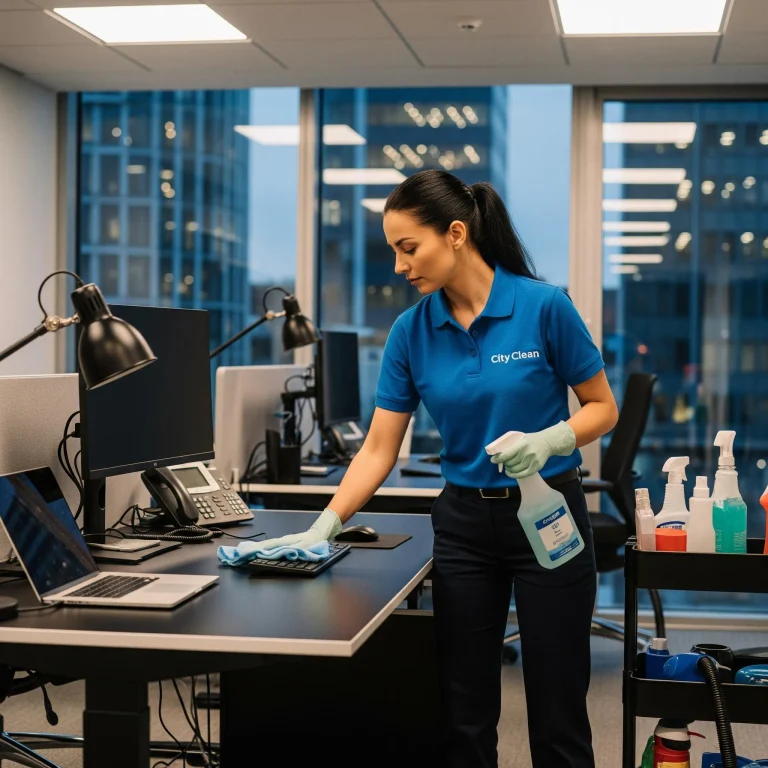
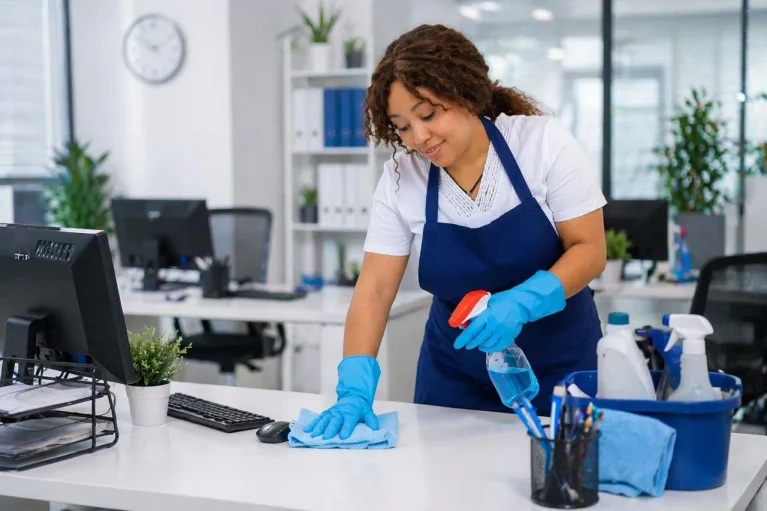
It is also important to discuss areas that are often overlooked, including door handles, light switches, shared equipment, reception counters, skirting boards, and frequently touched surfaces.
A clear scope of work prevents misunderstandings and helps both parties establish realistic expectations.
Before signing, make sure the cleaning agreement reflects the actual services discussed rather than relying on general promises of comprehensive cleaning.
3. Are Your Cleaning Staff Properly Trained and Supervised?
The quality of commercial cleaning depends heavily on the people performing the work.
Even when a contractor has professional equipment and effective cleaning products, poor staff training can lead to inconsistent results, damaged surfaces, and missed cleaning tasks.
Ask how employees are trained before they begin working at a commercial property. Find out whether they receive instruction in equipment handling, chemical safety, correct cleaning techniques, workplace procedures, and hygiene standards.
It is also worth asking how new employees are introduced to an existing cleaning site.
Different commercial buildings may have specific requirements. Cleaning staff working in offices, for example, need to understand how to respect confidential documents, avoid disturbing employees, and handle shared equipment carefully.
Supervision is equally important. Ask whether the contractor conducts regular inspections and who is responsible for monitoring cleaning performance.
A dependable commercial cleaning contractor should have a clear management structure. There should be someone responsible for checking completed work, addressing concerns, and ensuring employees follow the agreed cleaning schedule.
Proper training and supervision help create consistent cleaning results rather than relying entirely on individual employees.
4. Do You Have Insurance and the Necessary Safety Procedures?
Insurance and workplace safety should never be overlooked when hiring a commercial cleaning contractor.
Cleaning activities involve equipment, chemicals, wet floors, electrical appliances, and movement through occupied buildings. Without appropriate safety procedures, accidents can result in injuries, property damage, and unnecessary business disruption.
Ask whether the contractor holds appropriate public liability insurance and workers’ compensation coverage where required by applicable laws. You should also request documentation to verify that their coverage is current and suitable for the work being performed.
Discuss their workplace health and safety procedures. A professional contractor should understand how to identify hazards, manage cleaning chemicals, use warning signs, and reduce risks during cleaning activities.
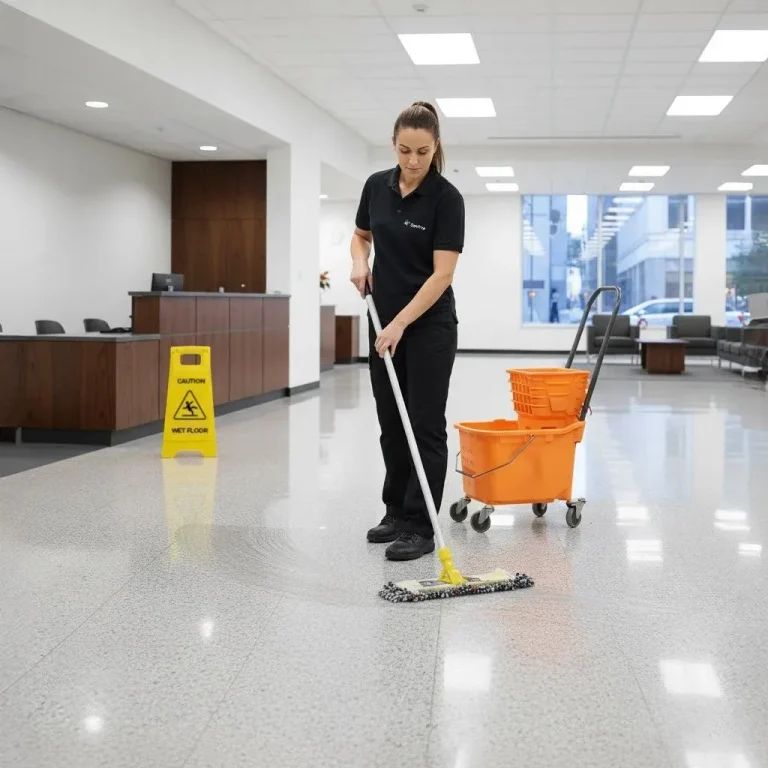
For example, wet floor signs should be placed in appropriate locations when mopping, particularly in entrances, hallways, kitchens, and other areas where employees and visitors regularly walk.
Chemical products should also be stored, labelled, and handled correctly. Staff should understand product instructions and the risks associated with mixing incompatible cleaning chemicals.
If your business operates in a specialised environment, ask whether the contractor can follow the additional safety and hygiene procedures required for that facility.
A contractor who takes workplace safety seriously helps protect your employees, customers, cleaning staff, and commercial property.
5. What Cleaning Products and Equipment Do You Use?
The cleaning products and equipment used by a contractor can significantly influence the quality of the service.
Different surfaces require different cleaning methods. Using an unsuitable chemical on a particular floor, countertop, or piece of equipment may cause damage or leave unwanted residue.
Ask what types of cleaning products the contractor normally uses and whether they can accommodate specific workplace requirements.
For example, businesses with sensitive flooring, delicate surfaces, or employees who are sensitive to strong fragrances may need particular cleaning products.
It is also useful to understand whether the contractor uses commercial-grade equipment designed for larger spaces and frequent use.
Professional equipment can improve cleaning efficiency, remove accumulated dirt more effectively, and help maintain consistent results across different areas of a property.
Another important consideration is environmental responsibility. Ask whether the contractor offers suitable lower-impact cleaning products and how they manage chemical storage, packaging, and waste.
However, do not assume that a product is automatically effective or safe simply because it is described as environmentally friendly. Cleaning products must still be appropriate for the surface, task, and hygiene requirements.
A reliable contractor should be able to explain why particular products and equipment are selected for your workplace.
6. How Do You Maintain Cleaning Quality and Handle Complaints?
One of the biggest concerns businesses have when hiring a cleaning provider is inconsistent service.
A commercial cleaning contractor may deliver excellent results during the first few weeks, but performance can decline if there is no proper monitoring system.
Ask how the contractor measures cleaning quality and ensures that agreed tasks are completed consistently.
A professional provider should have a quality assurance process that includes scheduled inspections, cleaning checklists, supervisor reviews, and communication with the client.
It is also important to understand how they handle complaints.
For example, if a restroom is not properly cleaned or rubbish collection is missed, you should know who to contact and how quickly the issue will be addressed.
Ask whether they have a dedicated supervisor or account manager responsible for your property.
Regular communication can also help identify problems before they become ongoing concerns. A contractor who welcomes feedback and takes corrective action demonstrates a commitment to maintaining service standards.
You should also discuss whether cleaning schedules and procedures can be adjusted when business needs change.
Effective quality control means that cleaning standards remain consistent throughout the contract, not just when the service begins.
7. How Much Do Your Commercial Cleaning Services Cost?
Pricing is naturally one of the most important considerations when choosing a commercial cleaning contractor. However, the cheapest quotation does not always provide the best value.
Cleaning costs can depend on several factors, including the size of the building, number of rooms, cleaning frequency, required services, floor types, property condition, and staffing requirements.
Ask how the contractor calculates their quotation and whether they conduct a site inspection before providing a final price.
A proper assessment allows the contractor to understand the building’s actual requirements rather than providing an estimate based on limited information.
You should also ask whether the quotation includes labour, cleaning products, equipment, rubbish removal, and any specialised cleaning tasks.
Clarify whether additional charges apply for emergency cleaning, after-hours services, public holidays, or requests outside the agreed scope.
A detailed quotation makes it easier to compare different providers fairly.
For example, one contractor may offer a lower monthly price but exclude restroom consumables and periodic deep cleaning. Another may charge slightly more while including supervision, equipment, and additional quality checks.
When comparing quotations, consider the complete service rather than focusing only on the initial price.
The goal is to find a contractor who offers reliable cleaning, transparent pricing, and a service agreement that matches your operational needs.
8. Can You Provide References From Existing Commercial Clients?
References can provide useful insight into how a cleaning contractor performs after a contract has been established.
While a provider may present an impressive proposal, feedback from existing or previous clients can help you understand whether they consistently deliver on their promises.
Ask whether they can provide references from businesses with similar property types or cleaning requirements.
If possible, speak with a current client and ask about their overall experience.
You may want to understand whether cleaning staff arrive on schedule, whether agreed tasks are completed properly, and how the contractor responds when problems occur.
It is also helpful to ask whether the cleaning quality has remained consistent over time.
A contractor who has maintained long-term commercial relationships may demonstrate an ability to manage expectations and provide dependable service.
However, references should be considered alongside other factors, including insurance, staff training, pricing, and the proposed cleaning scope.
The purpose is to develop a complete picture of the contractor’s reliability before making a commitment.
9. What Happens if a Cleaner Is Absent or Unable to Attend?
Staff availability is an important issue that businesses sometimes overlook during the hiring process.
If a cleaner becomes sick, takes leave, or cannot attend a scheduled shift, your workplace may be left without the cleaning services it needs.
Ask what arrangements the contractor has for staff absences and unexpected scheduling problems.
A reliable provider should have a reasonable backup staffing process to minimise interruptions.
You should also clarify whether replacement cleaners receive the necessary site instructions before entering your property.
This is particularly important for businesses with restricted access areas, security procedures, or specialised cleaning requirements.
Ask how the contractor communicates schedule changes and whether you will receive advance notice when staffing arrangements need to be adjusted.
A dependable cleaning provider should have a plan for maintaining service continuity rather than leaving clients to deal with unexpected cleaning gaps.
10. Can You Adjust the Cleaning Schedule as Our Business Changes?
Commercial cleaning requirements are not always fixed.
A business may expand, increase its workforce, introduce new operating hours, renovate its premises, or experience seasonal increases in customer traffic.
These changes can affect how frequently certain areas need cleaning.
Ask whether the contractor can adjust the cleaning schedule when your business requirements change.
For example, a growing office may need additional restroom cleaning, more frequent kitchen maintenance, or increased rubbish collection.
A retail business may require additional cleaning during busy trading periods, while a commercial facility may need periodic deep cleaning after maintenance or renovation work.
Discuss whether the contractor offers flexible scheduling and how changes to the service agreement are handled.
You should also clarify whether additional services require a separate quotation or can be incorporated into the existing arrangement.
Flexibility is important because it allows your cleaning arrangements to remain practical as your workplace evolves.
11. What Are Your Contract Terms and Cancellation Conditions?
Before signing a commercial cleaning agreement, take the time to understand its terms and conditions.
A cleaning contract should clearly explain the services being provided, cleaning frequency, payment arrangements, responsibilities, and duration of the agreement.
Ask whether the contract has a minimum commitment period and whether there are specific notice requirements for cancellation.
You should also understand what happens if the contractor repeatedly fails to meet the agreed cleaning standards.
For example, the agreement may outline procedures for reporting service issues, requesting corrective action, and reviewing ongoing performance.
Discuss how price increases are handled and whether changes to the cleaning scope require written approval.
It is also worth understanding who is responsible for supplying consumables, maintaining equipment, and arranging access to the property.
A transparent agreement protects both parties by establishing clear expectations from the beginning.
Never feel pressured to sign a contract that contains unclear responsibilities or conditions you do not fully understand.
How to Compare Commercial Cleaning Contractors Effectively
Once you have asked the important questions, the next step is comparing your options carefully.
Avoid choosing a contractor based entirely on the lowest quotation or the most attractive sales presentation.
Instead, consider how well each provider understands your property’s cleaning requirements and whether their proposed service addresses your actual concerns.
Pay attention to the level of detail in their quotation. A professional proposal should explain the cleaning scope, service frequency, staffing arrangements, products, equipment, and quality assurance procedures.
Communication is another useful indicator.
A contractor who responds clearly, answers questions directly, and takes time to understand your business is more likely to establish a productive working relationship.
You should also consider whether the provider has enough staffing capacity to maintain the agreed schedule and handle unexpected requirements.
Ultimately, the best commercial cleaning contractor is one that combines experience, accountability, flexibility, transparent pricing, and consistent service quality.
Common Mistakes to Avoid When Hiring a Commercial Cleaning Contractor
One common mistake is selecting a cleaning provider based solely on price. While controlling operating expenses is important, an unusually low quotation may indicate that certain services, supervision, equipment, or cleaning supplies are excluded.
Another mistake is accepting a vague cleaning agreement. Without clearly defined responsibilities, businesses may discover that important areas or tasks are not included in the service.
Failing to check insurance and safety procedures is another serious oversight. Commercial cleaning involves risks, and businesses should understand how their contractors manage workplace hazards and protect their property.
Some businesses also forget to ask about employee training and supervision. Even a contractor with years of experience may deliver inconsistent results if cleaning staff are not properly trained or monitored.
Finally, failing to establish a communication process can make small problems unnecessarily difficult to resolve. Businesses should know exactly who to contact when cleaning concerns arise and what corrective action to expect.
Avoiding these mistakes helps establish a stronger working relationship and reduces the likelihood of unexpected problems after the contract begins.
Common Myths About Hiring a Commercial Cleaning Contractor
A Lower Cleaning Price Always Means Better Value
This is one of the most common misconceptions in commercial cleaning. A lower price may look attractive initially, but it does not necessarily include the same level of service, staffing, supervision, or cleaning materials as a more comprehensive quotation.
True value comes from receiving consistent cleaning services that meet your workplace requirements at a reasonable and transparent cost.
Every Commercial Cleaning Contractor Provides the Same Services
Commercial cleaning providers can differ significantly in their experience, equipment, staff training, and service capabilities.
Some specialise in general office maintenance, while others offer additional services for industrial facilities, retail properties, and specialised commercial environments.
Businesses should always confirm the actual services included in their agreement.
Professional Cleaning Only Matters When a Workplace Looks Dirty
Visible cleanliness is important, but it does not tell the whole story.
Frequently touched surfaces, shared facilities, restrooms, and kitchens require regular attention even when they appear clean.
Consistent cleaning helps maintain better hygiene conditions and reduces the accumulation of dirt and contamination throughout the workplace.
Once a Cleaning Contract Is Signed, No Further Monitoring Is Necessary
A cleaning agreement does not automatically guarantee consistent results.
Regular communication, quality inspections, and performance reviews help ensure the contractor continues meeting the agreed standards.
Businesses should maintain an active relationship with their cleaning provider rather than assuming everything will always run smoothly.
How Professional Commercial Cleaning Creates a Healthier Workplace
A well-managed commercial cleaning programme supports a healthier and more productive working environment.
Regular cleaning helps control dust, dirt, and the buildup of unwanted residues on workplace surfaces. Proper restroom maintenance supports hygiene, while consistent kitchen cleaning helps keep shared food preparation and dining areas in better condition.
Clean floors, organised workspaces, and well-maintained entrances also contribute to a more professional business environment.
These improvements can influence how employees feel about their workplace and how customers perceive the business.
For commercial property managers, consistent cleaning can also support the long-term maintenance of flooring, fixtures, furniture, and other building surfaces.
However, effective cleaning requires more than occasional attention. It depends on a suitable cleaning schedule, trained employees, appropriate products, and regular quality checks.
Choosing a contractor who understands these responsibilities helps businesses maintain standards without placing unnecessary pressure on internal staff.
What Makes an Effective Commercial Cleaning Contract?
An effective commercial cleaning contract is built around clearly defined responsibilities, realistic service expectations, and reliable communication.
It should explain the areas being cleaned, the tasks included, how often services are performed, and which party is responsible for providing supplies and equipment.
The agreement should also establish quality standards and explain how performance issues are reported and resolved.
Staffing arrangements, insurance requirements, access procedures, and payment conditions should be clearly documented.
Another important feature is flexibility. Commercial properties change over time, and cleaning arrangements should be capable of adapting to new requirements.
A well-structured contract creates accountability and makes it easier for businesses to evaluate whether the cleaning service is delivering the expected value.
Rather than relying on verbal promises, both parties should have a clear written understanding of what successful cleaning service looks like.
Summary: Choosing a Reliable Commercial Cleaning Contractor
Hiring a commercial cleaning contractor requires more consideration than comparing prices. Businesses should evaluate experience, service coverage, employee training, insurance, cleaning products, quality control, and contract conditions before making a decision.
It is equally important to understand how the contractor handles staff absences, customer feedback, scheduling changes, and unexpected cleaning requirements.
A reliable provider should offer transparent communication, a clearly defined scope of work, and a consistent approach to maintaining workplace hygiene.
Taking the time to ask these questions before signing an agreement can help prevent misunderstandings, reduce operational disruptions, and create a cleaner environment for employees, customers, and visitors.
Key Takeaways When Hiring a Commercial Cleaning Contractor
Choosing the right commercial cleaning contractor starts with understanding your property’s specific cleaning requirements. A provider should have relevant experience, properly trained employees, appropriate insurance, and the equipment needed to complete the agreed work.
A detailed cleaning agreement is equally important. It should explain exactly what is included, how often services are performed, what the business will pay, and how service problems will be resolved.
Do not overlook quality assurance, staff availability, or communication. These factors often determine whether a cleaning provider can maintain consistent results over the long term.
Most importantly, look for a contractor who treats commercial cleaning as an ongoing responsibility rather than simply completing a list of tasks. A dependable cleaning partnership should support workplace hygiene, protect your commercial property, and provide peace of mind.
Frequently Asked Questions About Hiring a Commercial Cleaning Contractor
What should I look for when hiring a commercial cleaning contractor?
Look for a contractor with relevant commercial cleaning experience, trained employees, appropriate insurance, reliable equipment, transparent pricing, and established quality control procedures. You should also check whether their services match your property’s specific cleaning requirements.
How much does a commercial cleaning contractor typically charge?
Commercial cleaning costs vary depending on building size, cleaning frequency, property condition, service requirements, labour, and specialised cleaning needs. The best way to understand the cost is to request a detailed quotation based on an assessment of your premises.
Should a commercial cleaning contractor have insurance?
Yes. Businesses should verify that their cleaning contractor maintains appropriate insurance, including public liability coverage and workers’ compensation where required. This helps address potential risks involving property damage, workplace accidents, and cleaning operations.
How often should a commercial property be professionally cleaned?
The ideal cleaning frequency depends on the property’s size, occupancy, foot traffic, and daily activities. Busy offices and retail environments may require daily cleaning, while certain specialised maintenance tasks can be scheduled weekly, monthly, or periodically.
What is included in a commercial cleaning service?
Typical commercial cleaning services may include vacuuming, mopping, dusting, rubbish removal, restroom cleaning, kitchen maintenance, and sanitising frequently touched surfaces. Additional services such as carpet cleaning, window cleaning, and floor maintenance may be included or quoted separately.
How can I tell if a commercial cleaning contractor is reliable?
A reliable contractor communicates clearly, arrives according to the agreed schedule, follows the cleaning scope, and maintains consistent quality. They should also have trained staff, appropriate supervision, a process for handling complaints, and a willingness to address service concerns promptly.
Is it better to hire a commercial cleaning contractor or employ an in-house cleaning team?
The right choice depends on your business size, budget, and cleaning requirements. Hiring a contractor can provide access to trained cleaning staff, professional equipment, and established management procedures without requiring your business to directly manage every aspect of cleaning operations. An in-house team may be suitable for businesses that need dedicated daily cleaning staff and direct operational control.
Conclusion: Make a Confident Decision When Hiring a Commercial Cleaning Contractor
Choosing the right commercial cleaning contractor is an investment in your workplace, your employees, and your business reputation. A dependable cleaning provider helps maintain professional standards, supports workplace hygiene, and reduces the daily burden of managing cleaning responsibilities internally.
Before signing an agreement, take the time to ask about experience, services, staff training, insurance, cleaning methods, quality control, pricing, and contract conditions. These conversations can reveal important differences between contractors and help you identify a provider that genuinely understands your needs.
At CleanPro, we understand the importance of maintaining clean, organised, and hygienic commercial environments. Whether your business needs regular office cleaning, commercial property maintenance, or a more tailored cleaning arrangement, choosing the right cleaning approach can make a meaningful difference.
If you are looking for dependable commercial cleaning support, contact CleanPro to discuss your property requirements and find a cleaning solution that works for your business.